
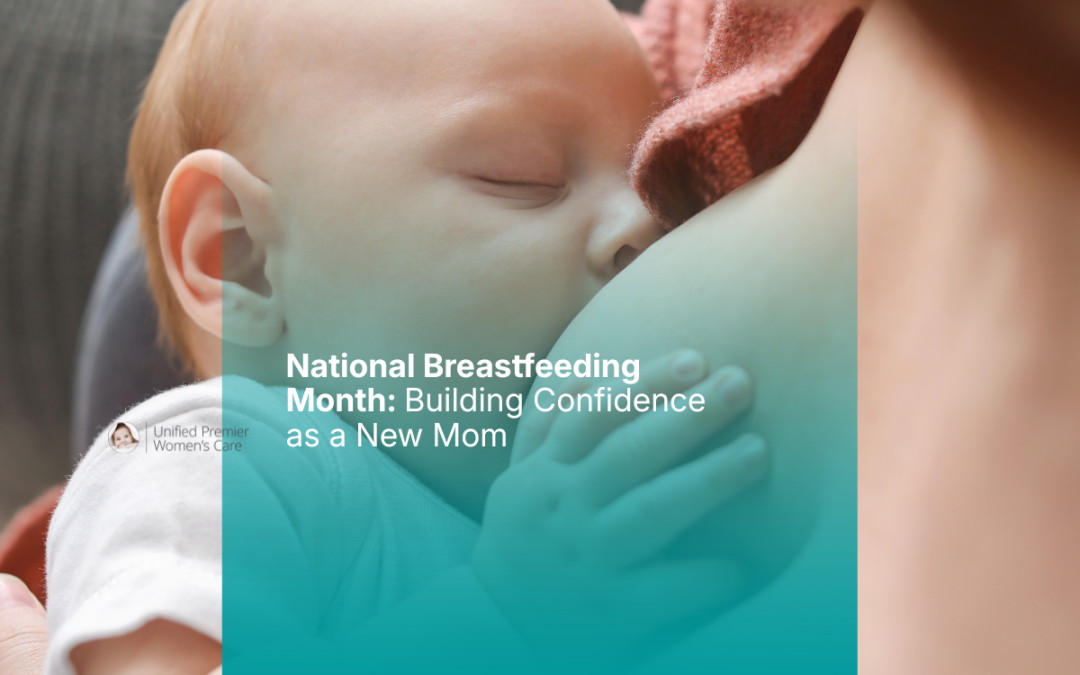
August is National Breastfeeding Month — a time dedicated to celebrating the breastfeeding journey and supporting the mothers who embark on it. If you’ve recently given birth or are preparing to breastfeed for the first time, it’s completely normal to feel uncertain. Breastfeeding is a skill — for both you and your baby — and building confidence takes time, patience, and the right support.
At Unified Premier Women’s Care, our obstetrics team is here to support you through every stage of the postpartum period, including your breastfeeding journey. Here’s what new moms most need to know as they find their footing.
| “Dr. Goh has been amazing through my whole pregnancy journey. She has truly taken care of me!” – Unified Premiere Women’s Care Patient Testimonial |
The Learning Curve Is Real — and Normal
One of the most important things to understand is that struggling at first doesn’t mean you’re failing. Many new moms expect breastfeeding to come naturally from day one, and when it doesn’t, they wonder what’s wrong. The truth is that latch difficulties, nipple soreness, cluster feeding, and concerns about supply are among the most common reasons new moms feel overwhelmed.
Your milk supply doesn’t fully “come in” until 2–5 days after birth, and your body and baby are both learning. Every feeding is practice. Most women who persevere through the early challenges find that breastfeeding becomes much more comfortable within the first few weeks.
Tips for Building Your Breastfeeding Confidence
- Start skin-to-skin early. Contact between you and your baby right after birth helps stimulate feeding instincts and encourages milk production. Even before your milk comes in, your colostrum — the thick, nutrient-rich first milk — is exactly what your newborn needs.
- Aim to feed on demand. Newborns typically feed 8–12 times in a 24-hour period. Feeding frequently in the early days helps establish your supply. Watch for hunger cues (rooting, sucking on hands, turning the head) rather than watching the clock.
- Get the latch right. A shallow latch is the most common source of nipple pain and can interfere with milk transfer. Your baby’s mouth should cover most of the areola — not just the nipple. If every feed is painful, that’s a signal to ask for help.
- Know that cluster feeding is normal. Newborns often feed very frequently in the evenings, sometimes for hours at a stretch. This is not a sign that you’re not producing enough milk — it’s your baby communicating with your body to boost supply. It’s exhausting, but it usually passes within a few days.
- Assess output, not intake. Since you can’t see how much your baby is drinking, track wet and dirty diapers instead. In the first week, expect at least one wet diaper per day of life. By day five and beyond, 6 or more wet diapers a day indicates your baby is getting enough.
- Nourish yourself. Your body is working hard. Aim for an extra 400–500 calories a day, prioritize protein and calcium, and stay well-hydrated. Keep a water bottle nearby during every feeding session.
When to Reach Out for Support
You don’t have to troubleshoot alone. Reach out to your provider or a lactation consultant if you notice:
- Persistent nipple pain or cracking beyond the first week
- Signs your baby isn’t getting enough (fewer than 6 wet diapers after day five, not regaining birth weight by 2 weeks, excessive fussiness)
- Symptoms of mastitis — breast pain, warmth, redness, or fever
- Feelings of anxiety or dread around feedings
- Concerns about low supply that don’t resolve with more frequent feeding
There is no award for struggling through alone. Asking for help is the confident, proactive thing to do.
The Emotional Side of Breastfeeding
Breastfeeding isn’t only physical — it can bring up a wide range of emotions. Some moms feel an immediate bond and deep satisfaction. Others feel touched out, overwhelmed, or even resentful at times. Both experiences are valid.
If you’re feeling persistently low, anxious, or disconnected in the weeks after birth, please talk to your provider. Postpartum mood disorders are common and treatable — they don’t have to derail your breastfeeding journey or your experience of new motherhood.
Supporting Your Postpartum Journey at Unified Premier Women’s Care
Our obstetrics team and pregnancy services are designed to care for you through the full arc of your reproductive journey — including the postpartum period. We also offer classes that can help you prepare for what’s ahead. Your postpartum visits are the perfect time to discuss any breastfeeding concerns, so please bring your questions — no matter how small they may seem.
| “I love Dr. Goh. She has been my OB for almost five years now and was with me every step of the way through my first pregnancy, delivery, and postpartum care. I appreciate her straight forward care and personal touches she adds to make me always feel comfortable. She never forces me to do anything that is uncomfortable or that I am not yet ready for. She supports me in all of the new exciting and scary parts of life as a woman and a mom!” – Unified Premiere Women’s Care Patient Testimonial |
You’re Already Doing Something Amazing
Whether you breastfeed for two weeks or two years, every feeding you give your baby is a gift. Be patient with yourself. Seek support when you need it. And know that your Unified Premier Women’s Care team is rooting for you.
To learn more or schedule an appointment, Contact us to schedule your postpartum visit or call us at (770) 427-0285.